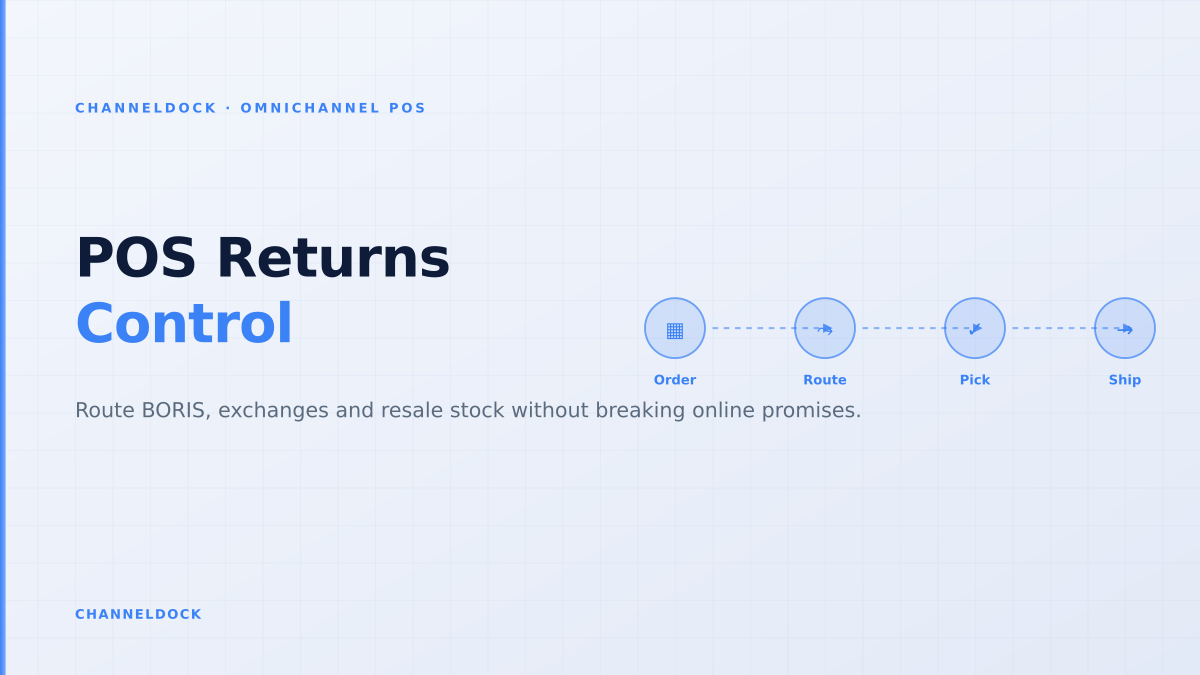
POS Omnichannel Returns: Keep Returned Stock Sellable
In 2026, the hard part of omnichannel retail is no longer taking an online return in a store. The hard part is deciding when that returned item is safe to sell again through the POS, webshop, bol.com, Amazon, Zalando or a warehouse shipment. Competitor content from Shopify, Lightspeed, Square and Manhattan talks clearly about in-store returns and unified commerce, but most guides stop at the customer journey. They say the return is convenient; they rarely show the inventory controls that stop a refund from becoming an accidental oversell.
For retailers using a physical POS alongside ecommerce, marketplace and warehouse channels, the return counter is now an inventory gateway. A scanned item can be exchanged, refunded, quarantined, repackaged, transferred or resold. If those outcomes all hit the same stock bucket, your available-to-sell number becomes fiction.
Why POS returns break online inventory
A store associate sees a customer and a receipt. The webshop sees an order. The marketplace sees a return status. The warehouse sees stock. Accounting sees a refund. Those are five different operational records, and they do not always update in the same sequence.
The failure usually starts with a shortcut: the POS completes a refund and automatically increments local stock. That is logical for a small single-store retailer, but it is dangerous for a brand that sells the same SKU online. If the item is opened, missing packaging or physically sitting behind the counter, the webshop can show stock that nobody can actually pick.
The gap in most omnichannel POS guides
Research across Shopify POS, Lightspeed, Square app listings, G2 reviews and retail operations articles shows a repeating pattern: vendors promise real-time inventory sync, then users discuss the messy edge cases in reviews and forums. Bundle items, multi-location stock, ship-from-store, store pickup and in-store returns all need more than a simple quantity update.
This is where ChannelDock should sit in the retailer's operations stack. The POS can remain the customer-facing checkout tool, while ChannelDock keeps the operational view connected to inventory control, order management and marketplace integrations through the broader integration layer.
The most expensive return mistake is not accepting the item back. It is putting it straight into sellable stock while the marketplace order, webshop refund, exchange and physical condition are still unresolved.
A practical return status model
Retailers do not need a complicated returns department to make POS returns safer. They need a small number of statuses that separate customer outcome from stock outcome. The customer can receive a refund immediately, while the product moves through a controlled stock decision.
- Received, not inspected: the item is back in the store but not sellable yet.
- Sellable in store: the item can return to shelf stock, but not necessarily to online availability.
- Sellable online: the item is in a pickable location with packaging and barcode confirmed.
- Rework or repackage: the item needs action before resale.
- Damaged or supplier return: the item should leave available-to-sell entirely.
- 1Identify the original order sourceAttach the POS return to the webshop, marketplace, B2B or manual order ID before staff choose refund, exchange or store credit.
- 2Separate refund from resaleA refund confirms the customer outcome. It should not automatically make the item available to bol.com, Amazon, Shopify or the sales floor.
- 3Inspect and classify conditionUse simple statuses: sellable, repackage, damaged, supplier return, quarantine. Only one of those should update available-to-sell stock.
- 4Route the item to the right locationKeep store shelf, backroom, warehouse and 3PL stock separate so a store return does not accidentally promise a warehouse shipment.
- 5Publish availability after the stock eventOnce condition and location are confirmed, push the new available quantity to webshops, marketplaces and POS in that order.
How to route BORIS without creating false stock
BORIS — buy online, return in store — looks simple from the customer's side. For operations, it is a cross-channel stock transfer. The item moves from an online order record into a physical retail location, but the refund, inspection and resale channel may each happen at different times.
The safest pattern is to route every BORIS item through a holding location first. That can be a virtual location such as “store return inspection” or a physical backroom bin. The key is that this location does not publish inventory to marketplaces or the webshop by default. Staff then move the item into sellable stock only when it passes inspection.
Simple POS return
- Refund is completed at the till
- Inventory is increased immediately
- Marketplace status is checked later
- Damaged or opened items can appear online
Omnichannel return controlRecommended
- Return is linked to the original order
- Condition decides if stock is sellable
- Location rules protect store and warehouse promises
- Channels update after inspection
What to measure after launch
A POS returns workflow is working when it reduces surprises, not when it simply processes refunds faster. Track the number of returns that go straight to sellable stock, the percentage requiring rework, the time from return to resale, and the number of online orders cancelled because returned stock was not actually pickable.
Also watch channel-specific effects. If a marketplace order is cancelled after a POS return created false stock, that is not a marketplace problem. It is a sequencing problem. If staff cannot tell whether a returned item belongs to a webshop, store or marketplace order, that is not a training issue. It is a data-linking issue.
The best omnichannel return flow is not the fastest refund. It is the cleanest handoff from customer service to sellable inventory.
Where ChannelDock fits
ChannelDock's POS proposition is strongest when retailers think beyond the till. Physical checkout, online orders, B2B orders, marketplaces and manual entries need one operational inbox, not five disconnected sources. A returned item should update the same operational truth that your warehouse, POS and marketplaces depend on.
That is why POS return control belongs next to pick and pack execution, warehouse stock visibility and order routing. If the item cannot be picked, packed or promised, it should not be published as available stock.
- Treat BORIS as an inventory workflow, not just a customer-service policy.
- Keep refund, exchange and restock as separate events in the operations layer.
- Do not expose store-returned items to marketplaces until condition and location are confirmed.
- Use ChannelDock pages for inventory control, order visibility and POS operations as the internal-link path from this topic.
FAQ
What is POS omnichannel returns management?
Why should a refund not automatically restock inventory?
How do I prevent online overselling after in-store returns?
Can POS returns work with marketplaces like bol.com or Amazon?
Which ChannelDock features support this workflow?
Conclusion
POS omnichannel returns are a growth lever only when they protect inventory truth. Let the POS handle the customer moment, but let your operations layer decide whether returned stock is sellable, where it lives and which channels can promise it. Retailers that make that split avoid the classic trap: a happy refund at the counter followed by a cancelled marketplace order the next day.